By Hira Ijaz . Posted on October 27, 2023
In the world of data-driven decision making, surveys are a goldmine of insights. But, the real challenge lies in analyzing these surveys, especially the open-ended responses. Traditional methods can be time-consuming and often lack the depth of understanding required to draw meaningful conclusions. Enter ChatGPT, a powerful AI tool that’s revolutionizing the way we analyze survey data.
Imagine this: You’ve just wrapped up a massive customer satisfaction survey for your company. Thousands of responses are pouring in, each one a valuable perspective. But as you start to sift through the data, you realize the enormity of the task ahead. The open-ended responses are particularly daunting – a vast sea of text waiting to be deciphered.
Now, imagine having a tool that could not only read through all those responses but also understand the nuances, identify trends, and present you with actionable insights. Sounds like a dream, right? Well, with ChatGPT, this is not just a dream but a reality.
And if you’re looking for an alternative that offers enhanced security, greater customization, and more control over your data, there are solutions designed specifically to meet those needs.
This blog post will guide you on how to leverage ChatGPT for your survey analysis, turning the daunting task into a breeze. So, let’s dive in!
Understanding Survey Analysis
Hey there, fellow data enthusiasts! Let’s kick things off by getting a solid grip on what survey analysis really is.
Survey analysis is all about diving deep into the data collected from surveys to extract meaningful insights. It’s like being a detective, sifting through clues (data) to solve a mystery (understand your audience).
Survey analysis isn’t just about crunching numbers. It’s also about understanding the sentiments, opinions, and trends hidden in the responses. And that’s where things can get a bit tricky, especially when dealing with open-ended responses.
You see, unlike multiple-choice questions, open-ended responses can’t be neatly categorized or quantified. They’re messy, unpredictable, and oh-so-human. But they’re also a goldmine of insights, waiting to be discovered.
So, how do we make sense of all this data? How do we turn these raw, unstructured responses into actionable insights? That’s where ChatGPT comes into play. But more on that later. For now, just remember: survey analysis is your ticket to understanding your audience on a deeper level. And with the right tools, it can be a breeze.
Stay tuned!
Role of ChatGPT in Survey Analysis
Alright, let’s get down to the nitty-gritty: the role of ChatGPT in survey analysis.
Now, you might be thinking, “ChatGPT? Isn’t that just a chatbot?” Well, yes and no. While ChatGPT can indeed chat like a pro, it’s also a whiz at analyzing text. And that’s where it shines in survey analysis.
ChatGPT uses machine learning to understand and interpret text. It can read through thousands of open-ended responses, understand the nuances, and identify trends. It’s like having a super-smart assistant who can read and understand text faster and more accurately than any human.
But that’s not all. ChatGPT can also perform sentiment analysis, identifying the emotions behind the responses. This can be a game-changer when you’re trying to understand how your audience feels about a particular topic.
And the best part? ChatGPT can do all this in record time. What might take you hours, or even days, ChatGPT can do in minutes.
ChatGPT is your secret weapon for survey analysis. It’s fast, accurate, and can provide insights that might otherwise be missed. Stay tuned to learn how to harness its power!
Setting Up ChatGPT for Survey Analysis
You’re about to embark on a road trip. You’ve got your snacks, your playlist, and your destination in mind. But there’s one thing missing: the GPS. Without it, you’d be driving blind, unsure of the best route to take.
Setting up ChatGPT for survey analysis is a lot like setting up your GPS for a road trip. It’s the tool that’s going to guide you through the vast landscape of your survey data, helping you navigate through the open-ended responses and arrive at your destination: actionable insights.
However, ChatGPT needs to be set up correctly to give you the best results. And that’s what we’re going to cover in this section.
We’ll walk you through the process of configuring ChatGPT, importing your survey data, and preparing it for analysis. It might seem a bit technical, but don’t worry. We’ll break it down into simple, easy-to-follow steps.
So, buckle up and get ready for a journey into the world of survey analysis with ChatGPT. It’s going to be a game-changer for your data analysis process. Let’s get started!

Configuring ChatGPT
Alright, let’s roll up our sleeves and get down to business. The first step in setting up ChatGPT for survey analysis is configuring the tool.
Think of it like tuning a musical instrument. You want to get the settings just right to hit the perfect notes.
First off, you’ll need to access the settings of your ChatGPT. This is where you can tweak its parameters to suit your needs. You can adjust the temperature, which controls the randomness of the AI’s responses. A lower temperature makes the output more focused and deterministic, while a higher temperature makes it more diverse and creative.
Next, you can set the max tokens, which controls the length of the AI’s responses. This can be handy when dealing with lengthy survey responses.
You can also feed ChatGPT with your own content. This allows the AI to learn from your specific data, making its analysis even more accurate and relevant.
Remember, configuring ChatGPT is all about finding the sweet spot that works for your specific needs. So, don’t be afraid to experiment and tweak the settings until you get the results you’re after. Let’s move on to the next step!
Importing Survey Data
Now that we’ve got ChatGPT tuned up and ready to rock, it’s time to bring in the star of the show: your survey data.
Think of it like inviting guests to a party. You’ve got the venue set up (that’s ChatGPT), and now it’s time to send out the invites to your guests (the survey data).
Importing your survey data into ChatGPT is a straightforward process. You can feed the data directly into the tool, either by uploading a file or pasting the data into the input field.
But here’s a pro tip: make sure your data is clean and well-structured. This means removing any irrelevant information and ensuring the responses are clearly separated. This will help ChatGPT understand and analyze the data more effectively.
And remember, ChatGPT treats all data with utmost confidentiality. It doesn’t store or share your data, so you can rest assured that your survey responses are in safe hands.
So, go ahead and invite your data to the party. Once it’s in, ChatGPT can start working its magic, turning those raw responses into valuable insights. Let’s move on to the fun part: conducting the analysis!

Conducting the Analysis
Imagine you’re an archaeologist. You’ve done the hard work of setting up your dig site (that’s configuring ChatGPT and importing your survey data). Now comes the exciting part: the dig itself. This is where you carefully sift through the layers of dirt (the raw data) to uncover hidden treasures (insights).
Conducting the analysis with ChatGPT is a lot like that archaeological dig. It’s where you get to explore the depths of your survey data, uncovering insights that can help you understand your audience better.
But here’s the thing: just like an archaeological dig, the analysis needs to be conducted with care and precision. You need to know where to look, what to look for, and how to interpret what you find. And that’s where ChatGPT shines.
In this section, we’re going to guide you through the process of conducting the analysis with ChatGPT. We’ll show you how to interpret open-ended responses, identify trends and patterns, and extract actionable insights from your data.
So, grab your metaphorical shovel and let’s start digging. The treasures hidden in your survey data are waiting to be discovered!
Interpreting Open-Ended Responses
Alright, let’s dive into the heart of the matter: interpreting open-ended responses. This is where the magic really happens.
You see, open-ended responses are like uncut diamonds. They might look rough on the outside, but inside, they’re packed with priceless insights. And ChatGPT is your expert gem cutter, revealing the value hidden within.
Here’s how it works: ChatGPT reads through the responses, understanding the nuances of the language and the sentiments expressed. It’s not just looking at the words, but the meaning behind them. It’s like having a conversation with each respondent, understanding their perspective.
But here’s the best part: ChatGPT can do this at scale. It can interpret thousands of responses in the blink of an eye, something that would take a human analyst days, if not weeks.

And remember, interpreting open-ended responses isn’t just about understanding what’s being said. It’s also about understanding what’s not being said, the underlying sentiments and emotions. And that’s where ChatGPT’s sentiment analysis comes in. But we’ll get to that later. For now, let’s move on to the next step: identifying trends and patterns.
Identifying Trends and Patterns
Now that we’ve dug into interpreting open-ended responses, let’s shift gears and talk about identifying trends and patterns. This is like connecting the dots in a complex puzzle, revealing the bigger picture hidden within your data.
ChatGPT doesn’t just read and understand responses. It also identifies recurring themes and patterns, highlighting trends that might otherwise go unnoticed. It’s like having a bird’s eye view of your data, allowing you to see the landscape in its entirety.
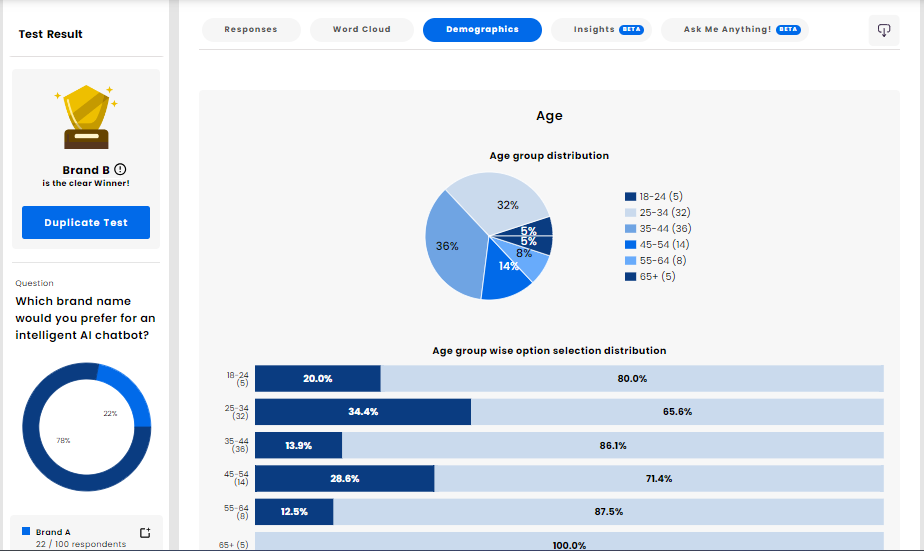
For instance, ChatGPT can identify common sentiments expressed across multiple responses, giving you a sense of the overall mood or opinion of your audience. It can also spot recurring keywords or phrases, highlighting topics of interest or concern.
ChatGPT can do all this in real-time, as the responses come in. This means you can start identifying trends and patterns early on, allowing you to adapt and respond more effectively.
So, don’t just skim the surface of your data. Dive deep, connect the dots, and uncover the trends and patterns that can guide your decision-making. Let’s move on to the next step: applying these insights!

Applying the Insights
Imagine you’ve just struck gold. You’ve sifted through mountains of dirt, and there it is: a shiny nugget of pure gold. That’s what it feels like when you uncover valuable insights from your survey data. But here’s the thing: finding the gold is just the first step. The real value comes from what you do with it.
Applying the insights from your survey analysis is like turning that raw gold nugget into a beautiful piece of jewelry. It’s about taking those raw insights and transforming them into strategies and actions that can drive your business forward.
In this section, we’ll walk you through how to effectively apply the insights gained from your survey analysis and transform them into actionable strategies.
We’ll explore how to leverage these insights to refine your strategies, enhance your products or services, and elevate your customer experience. Additionally, we’ll demonstrate how these insights can guide the improvement of your future surveys for even better results.
So, get ready to turn your gold nuggets into valuable assets. The journey from insight to action starts here!

Strategizing Based on Insights
Alright, let’s talk strategy. You’ve got your insights, and now it’s time to put them to work. This is where the rubber meets the road.
Think of it like this: your insights are the ingredients, and your strategy is the recipe. You need to mix and match the ingredients in the right way to create a delicious dish.
Here’s how you can do it: Start by looking at the big picture. What are the major trends and patterns that emerged from your analysis? These can guide your overall strategy, helping you align your efforts with your audience’s needs and preferences.

Next, dive into the specifics. Look at the individual insights and think about how they can inform your tactics. For instance, if your analysis revealed that customers are unhappy with your customer service, you might want to invest in training for your customer service team.
But here’s the key: always tie your actions back to your insights. This ensures that your strategy is data-driven, not just based on gut feelings.
So, go ahead and start cooking up your strategy. With the right insights and a thoughtful approach, you’re sure to create a recipe for success!
Improving Future Surveys
Now, let’s take a step back and look at the bigger picture. You’ve gathered insights, you’ve strategized, but what about the future? How can these insights help you improve your future surveys?
Think of it like a feedback loop. Your survey analysis isn’t just about understanding your audience now, it’s also about learning how to ask better questions in the future.
Here’s how you can do it: Use the insights from your analysis to refine your survey questions. If certain questions elicited insightful responses, consider asking similar questions in future surveys. On the other hand, if some questions were frequently misunderstood or skipped, you might want to rephrase them or replace them with more effective ones.
ChatGPT can help you craft effective survey questions. It can generate questions based on your specific needs and goals, ensuring that your future surveys are as insightful as possible.
So, don’t just use your insights to look back. Use them to look forward, improving your future surveys and continuing the cycle of learning and growth. Let’s keep the momentum going!
Bridging the Gap: The Need for a More Secure and Customizable AI for Survey Analysis
Survey analysis is a powerful tool for businesses, researchers, and organizations, helping them extract key insights, understand audience sentiments, and make data-driven decisions. However, while AI models like ChatGPT have made survey analysis more efficient, they come with limitations that many businesses find concerning.
One of the major challenges is data security. Many organizations handle sensitive customer data, employee feedback, and proprietary research that require strict privacy measures. Traditional AI models process data externally, which raises concerns about data retention and security compliance.
Another key factor is customization. Every organization has unique survey goals, whether it’s understanding consumer behavior, improving employee engagement, or conducting industry research. Generic AI tools lack the ability to adapt to specific industry terminology, company datasets, or custom survey formats, which can limit the accuracy and relevance of insights.
For organizations that need AI-powered survey analysis with greater security, flexibility, and deeper contextual understanding, there are specialized AI alternatives designed to address these gaps.
Why CustomGPT.ai is Ideal for Secure and Customized Survey Analysis
For organizations that require more than just basic AI-powered survey analysis, CustomGPT.ai offers a tailored, secure, and highly adaptable solution.
Unlike generic AI tools, which process data externally and may not fully understand industry-specific survey responses, CustomGPT.ai allows businesses to train AI on their own datasets, ensuring more accurate, relevant, and actionable insights.
Beyond accuracy, data privacy is a major concern when dealing with customer feedback, employee surveys, and proprietary research. CustomGPT.ai is SOC-2 compliant, meaning zero data retention and full control over sensitive information, making it ideal for organizations that prioritize security.
Key Features:
- Enterprise-Grade Security – Ensures confidentiality with SOC-2 compliance and zero data retention.
- Custom AI Training – Adapts to industry-specific terminology and survey structures for better insights.
- Advanced Sentiment & Trend Analysis – Identifies key themes, patterns, and audience sentiment accurately.
- Multilingual Support – Processes responses in 92+ languages, enhancing global survey analysis.
- Seamless Integration – Connects with existing survey tools, analytics dashboards, and APIs.
By choosing CustomGPT.ai, businesses can transform survey analysis into a powerful, data-driven strategy while maintaining full control over security and customization.
Explore CustomGPT.ai today and elevate your survey analysis with precision and security.
Frequently Asked Questions
1. What is ChatGPT survey analysis, and why is it useful?
ChatGPT survey analysis involves using AI to process and interpret survey data, particularly open-ended responses. It’s useful because it identifies trends, performs sentiment analysis, and provides actionable insights quickly and efficiently.
2. How does ChatGPT handle open-ended survey responses?
ChatGPT analyzes open-ended responses by identifying recurring themes, summarizing key points, and detecting sentiments, enabling users to gain deeper insights from qualitative data.
3. What types of surveys are best suited for ChatGPT analysis?
ChatGPT is ideal for surveys with open-ended questions, such as customer satisfaction surveys, employee feedback forms, and market research studies.
4. How can I prepare my survey data for ChatGPT analysis?
To prepare your data, clean it by removing irrelevant information, organize responses in a structured format, and upload it into ChatGPT for seamless analysis.
5. Can ChatGPT improve the quality of future surveys?
Yes, ChatGPT can help improve future surveys by analyzing previous responses to identify effective question types, detect unclear wording, and suggest better ways to capture insights.
Conclusion
Imagine you’ve just finished a marathon. You’ve pushed through the tough miles, kept your pace, and now you’re crossing the finish line. That’s what it feels like to reach the end of your survey analysis journey with ChatGPT. You’ve sifted through the data, uncovered insights, and applied them to your strategies. Now, it’s time to take a step back and reflect on what you’ve achieved.
So, as we wrap up this guide, remember that this is just the beginning of your journey with ChatGPT. The finish line is just a new starting point. Let’s take a moment to celebrate how far we’ve come, and look forward to the journey ahead.

Final Thoughts on Survey Analysis with ChatGPT
As we cross the finish line of this guide, let’s take a moment to appreciate the power of ChatGPT in survey analysis. It’s like having a super-powered assistant, capable of sifting through mountains of data, uncovering hidden insights, and helping you strategize based on those insights.
ChatGPT isn’t just a tool for analysis. It’s a tool for understanding. It helps you understand your audience, their needs, their concerns, and their sentiments. It’s like having a direct line to your audience’s thoughts and feelings.
And the best part? ChatGPT is always learning, always improving. It’s like a runner who never stops training, always striving to run faster, run further, and run smarter.
Remember, survey analysis with ChatGPT isn’t just about data. It’s about people. It’s about understanding and connecting with your audience on a deeper level. And that, my friends, is the true power of ChatGPT.
However, if you’re looking for an alternative that offers greater customization, enterprise-level security, and more control over your data, there are solutions designed specifically to meet those needs.
Explore a secure and customizable AI solution today and take your survey analysis to the next level.